
Many parents want to know when to start teaching math to their children. Our staff at Peace of Mind Daycare has found that kids can naturally pick up math concepts much sooner than you might think through everyday play. Our toddler care in Woodbury incorporates fun math for preschoolers into engaging experiences that toddlers aged 12 to 36 months actually enjoy, building number sense while having a good time. Let’s explore some ways to teach early childhood mathematics.
Babies absorb basic math ideas through regular play and daily routines. Most children, even before their first birthday, grasp concepts such as cause and effect, can predict what happens next, group similar toys, and notice size differences. We watch for signs such as hand-to-hand transfers (starting around 5 months), bringing hands together, reaching for toys, and mouthing objects — all early indicators that more structured math thinking is soon to come.
Pre-math concepts, such as one-to-one matching, are building blocks for future counting. Kids typically start learning to count between ages 1 and 2, with some counting to 10 by their second birthday. During snack time, we might say “take two crackers” or use toys where shapes match with like shapes. Most 2-year-olds can recite numbers to 10, though they’ve usually just memorized the sequence without understanding what those numbers actually mean.
How children move and talk directly supports math learning. Toddlers walk independently between 12 and 18 months and may start running and climbing furniture, which helps build spatial awareness. At 18 months, they mimic others, become curious about how things work, know about 50 words, and can string two words together, as well as being able to show “one” and “two” with their fingers.
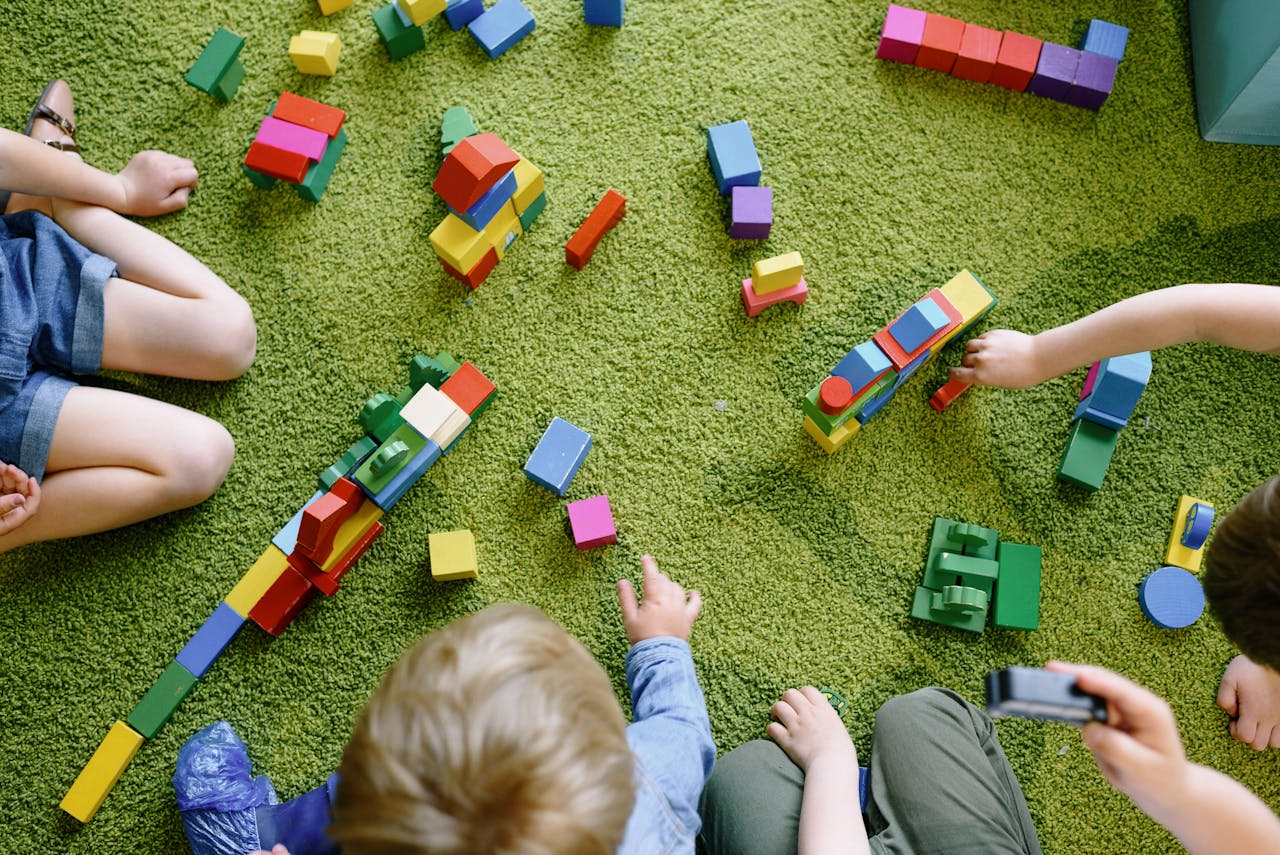
The second year brings big leaps in understanding numbers. Children begin to realize that numbers tell how many of something exists. They can recite number sequences (with some gaps), recognize basic shapes, and compare things using words such as “more,” “bigger,” or “enough.” Most children identify colors and shapes between 18 months and 3 years, with basic shapes such as circles and squares typically recognized by age 2.
Patterns have become part of daily life now. Kids naturally match similar shapes and notice patterns in routines. We make “shape monsters” using felt and googly eyes, turning learning into play. Songs are also great for math skills. “Five Little Ducks” with simple props encourages engagement; after practicing together, we encourage solo singing to lock in that learning.
Physical skills also support math thinking at this stage. They can kick balls, tackle stairs with help, stack blocks into towers, follow directions, and sort by shape and color. They also begin pretend play. Between ages 2 and 3, they string together number sequences (though sometimes skipping some), and by 3, most can count to 10 and split 10 items evenly between two people.
Significant changes occur between 24 and 36 months as children transition from recognizing numbers to solving problems. Children can count small groups of things with help between 36 and 48 months, according to Head Start guidelines. By 60 months, they compare groups by counting, grasp number order, and write some numbers up to 10 with support. We introduce measuring by having children line up blocks end-to-end and count them. Color sorting with pompoms and mini muffin tins turns math into a game while building thinking skills.
Memorizing number order comes before truly understanding counting. Kids need to know the sequence before they can match one number to one object. We build spatial skills through enjoyable building activities and obstacle courses that utilize pillows and furniture, which help improve balance and coordination. String measuring activities increase fine motor skills as children cut string pieces to match object lengths and compare them. We also practice measuring with body parts: “This rug is 4 feet long,” or “How many hands wide is this table?”
Brain development now supports more complex math thinking. Children aged 3 to 4 years old can count up to 30, count backward from 10, grasp concepts such as “first” and “second,” show their age on their fingers, and can count up to 15 items by age 4. We’ve found that 3-year-olds can solve puzzles, understand time, grasp cause and effect, chat easily, use pronouns correctly, and understand prepositions.
Children who are new to counting often jumble numbers, skip some, or mix up the order. That’s normal; they’re reciting from memory without understanding what the numbers mean. We bridge this gap at Peace of Mind with hands-on activities that make abstract ideas concrete. We create distraction-free zones by turning off screens, keeping materials within reach, sticking to routines, and taking breaks, which are especially important for the younger crowd.
Every child learns at their own pace, and we respect those differences. The early years matter a great deal for math skills, which predict later success in school. Early exposure doesn’t automatically lock in math success. Ongoing, supported experiences matter more than early skills alone. We mix up activities, create quiet learning spaces, break tasks into bite-sized pieces, and use timers to help toddlers focus, always keeping expectations age-appropriate.
Play-based learning is great for math development. Fun math approaches are more effective than standard drills — when math feels like play, kids hit a flow state where they’re fully engaged and enjoying learning.
Teaching math to toddlers takes know-how, patience, and the right setting. At Peace of Mind, math is taught naturally through play tailored to each age group. Studies show that targeted math learning in preschool leads to better math scores in fifth grade and that playtime at home builds early math skills such as counting, spatial reasoning, and number sense.
Math skills developed during these early years extend beyond basic counting. Children develop problem-solving and logical thinking skills, as well as the confidence that will help them throughout school and life.
Schedule a tour to see our approach in action, and discover how math learning can become both meaningful and enjoyable for your child. Contact us to learn how we cultivate math skills at our daycare through carefully designed play activities. We can’t wait to team up with you to support your child’s natural curiosity and math thinking during these critical early years.