
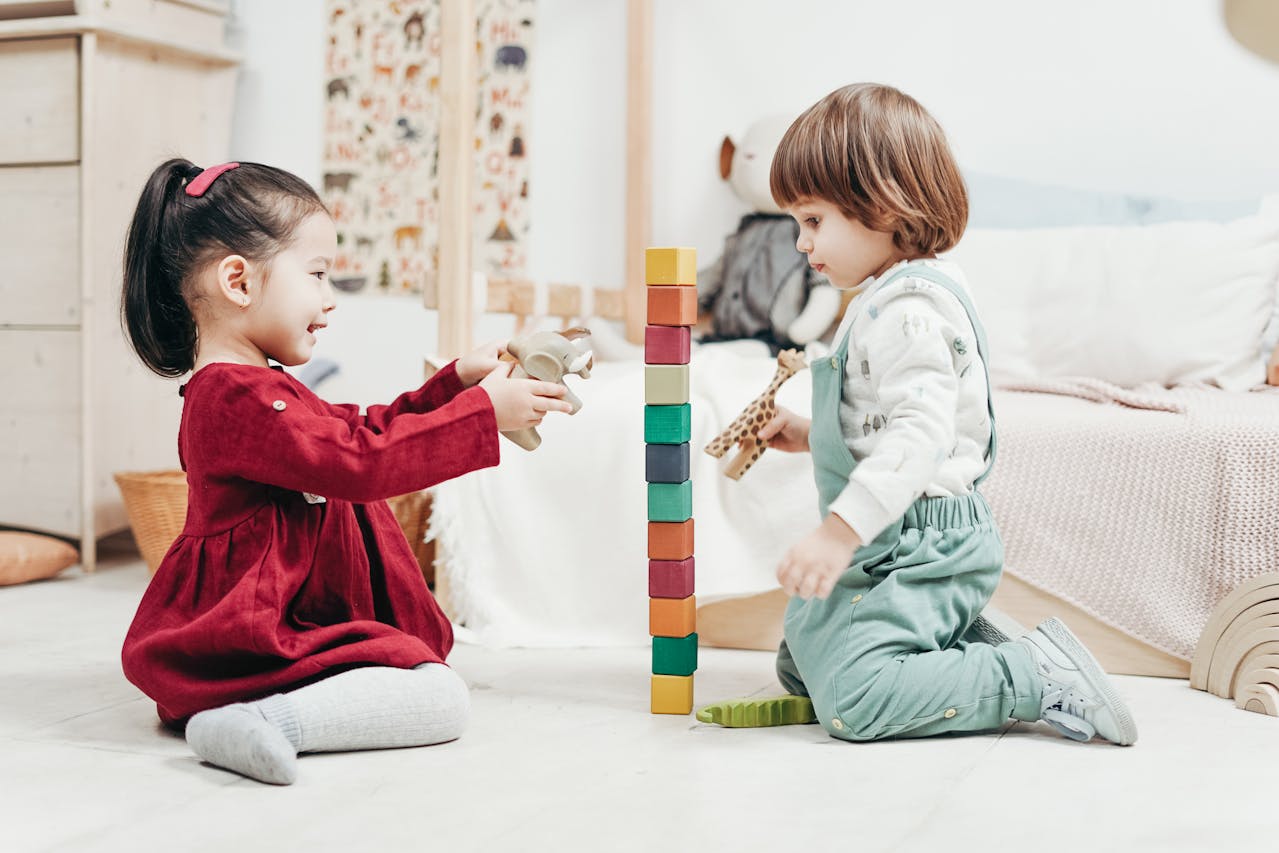
Ages 3-5 are perfect for teaching social skills. Children naturally become more giving, less self-centered, and play more cooperatively as they grow. Studies reveal that socializing kids age 4-12 directly shapes how they treat others. Young brains are highly adaptable, and what they learn sticks with them, boosting school success and emotional management.
Kids in early education programs are 40% more likely to finish high school and show significantly better reading skills by third grade. These are building blocks for emotional control, friendships, academics, resilience, and empathy development.
At 3, kids notice crying friends and start learning to take turns, while 4-year-olds show big emotions and want to please their friends. By 5, they understand gender differences and genuinely care when others feel hurt. Programs focused on emotional learning show a jump in grades, better attendance, higher graduation rates, and a significantly increased chance of earning a college degree.
Children pick up behaviors by watching people around them, including emotional responses and social cues. Your daily interactions become their instruction manual. When you say “please” to the delivery person or “thank you” to the cashier, your child’s taking notes. Being a good role model helps kids develop social competencies, emotional awareness, and problem-solving skills.
Brain science is clear: caregiver relationships deeply impact development. Young brains are incredibly adaptable, so how you act matters. When you stay calm in traffic, use kind words when you’re frustrated, or thank others for small kindnesses, you’re teaching your child that manners are ways to show you care.
Consistency across caregivers matters. Research shows that unpredictable caregiving impacts a child’s self-control. Grandparents, babysitters, and teachers should follow similar standards. When children see adults treating others respectfully, they copy these behaviors naturally.
Forget demanding perfect manners. Positive reinforcement creates lasting change from within. Studies show this approach builds self-esteem and motivation better than punishment ever could. When your little one says “please” without being reminded, try specific praise, such as “You asked so nicely for that cookie.” This works far better than waiting for flawless manners before giving any recognition.
Punishment might result in quick obedience, but it often backfires with aggression or resentment later on. Instead of battles over a forgotten “thank you,” celebrate when good manners happen naturally. Younger preschoolers respond strongly to rewards, with small tangible items (such as stickers or extra playtime) working better than just saying “good job.” A simple reward chart on the fridge can turn manners practice into an exciting game rather than a boring chore.
Kids learn best through fun, and pretend play turns manners lessons into adventures. Children who engage in pretend games develop better creativity, emotional skills, social abilities, executive functioning, and communication. Ages 3-5 are a prime time for imaginative play, including creating complex narratives, incorporating imaginary objects, and engaging in dramatic role-play with peers.
Set up simple scenarios at home. A pretend restaurant where they order politely, tea parties with turn-taking, or stores where they practice patience and gratitude become natural learning moments. This play helps kids collaborate, select roles, and resolve conflicts while developing theory-of-mind understanding.
Benefits go beyond manners. Symbolic play correlates with later reading and math success as kids learn representations. It also provides safe spaces to process strong feelings and stressful events, helping them rehearse coping strategies.
Knowing a child’s capabilities relative to their age prevents frustration. Two-year-olds use short sentences, show independence, and get excited around other children. Simply saying “please,” “thank you,” and incorporating gentle touches work well. By 3, kids speak clearly to strangers, show concern for crying friends, and play make-believe, a perfect opportunity to teach basic table manners and greetings.
Four-year-olds use the future tense, show a wide range of emotions, cooperate with other children, and want to please friends. Expect introductions and conversation skills. Five-year-olds tell elaborate stories, understand gender differences, separate reality from fantasy, and show concern for others.
The American Academy of Pediatrics recommends developmental screenings at 9, 18, and 24 or 30 months, with autism screening at 18 and 24 months. Every child develops differently, making it key to celebrate progress rather than demand perfection.
Music and games make manners lessons stick in young minds long after the activity ends. Studies on teaching “please and thank you” through songs prove that musical approaches work to build good values in young children.
Try games such as Magic Words Bingo where kids listen for polite words all day, or Manners Detective where they spot good behavior in picture books. Make up silly songs about saying “please” and “thank you,” or add manners lyrics to tunes they already know. Dance games with polite movements, such as bowing for “thank you” or gentle waves for “hello,” help active kids remember social skills through movement. Research confirms that physical play and social spontaneity boost creativity in preschoolers, so mixing movement with learning good manners supports multiple growth areas at once.
When your little one forgets their manners, gentle hints work better than demands or criticism. Consequences should happen quickly, make sense, and be consistent, and catching good behavior matters most for lasting change. Instead of demanding “Say please right now,” try asking “What’s the magic word?” or “How do we ask for help?” These prompts guide kids toward the right choice without starting a battle. Remember that preschoolers are still developing impulse control, emotional regulation, problem-solving skills, patience, negotiation, communication, and understanding of social situations.
Guiding kids through mistakes helps them learn better than punishment does. When your child grabs a snack without asking, you might say, “Oops, let’s try again. How do we ask for a snack?” This teaches instead of scolds. Connect smart consequences to the action, treat the child with respect, and ensure it makes sense to both of you. Directly relate good consequences to what happened, don’t embarrass the child, and make sure it feels fair to everyone involved.
Teaching manners works best when you mix patience, consistency, and positive feedback with age-appropriate goals and fun activities. These early social skills lay the groundwork for your child’s future friendships, school success, and emotional health. If you’re looking for a preschool partner in Woodbury that values social-emotional learning as much as academics, consider our research-backed approach to early childhood education, where we help families raise confident, capable, caring kids.
Image by cottonbro studio is licensed with Pexels License